Logistics and transportation organizations operate in complex networks that include carriers, warehouses, partners, and customers. Coordinating these operations requires accurate data, flexible workflows, and real-time visibility.

Operational Visibility
Bridge the Gap Between Legacy ERPs and Real-Time Action
Logistics and transportation organizations operate in complex networks that include carriers, warehouses, partners, and customers. Coordinating these operations requires accurate data, flexible workflows, and real-time visibility.
However, many logistics processes still depend on rigid ERP systems, manual freight auditing, and fragmented data flows.
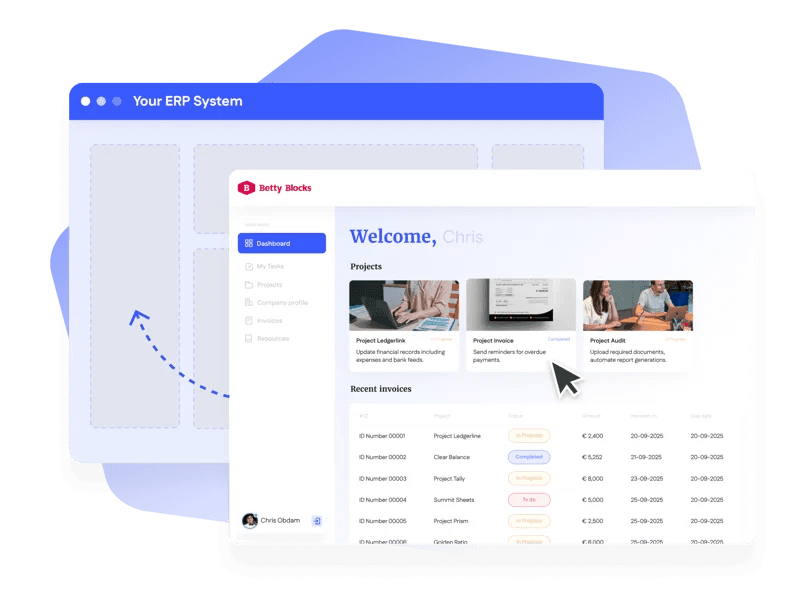
Betty Blocks enables logistics organizations to build custom carrier portals, operational apps, and real-time visibility tools that extend existing ERP systems. With visual API integrations and a Citizen Development framework, organizations can modernize logistics operations without vendor lock-in
Ecosystem Integration
Bridge the Gap Between Legacy ERPs and Real-Time Action
The logistics industry is rapidly becoming more digital and data-driven. By 2026, the digital logistics market is expected to reach $57.84 billion.
Despite these advancements, many organizations struggle with fragmented operational ecosystems. Logistics operations often involve multiple external partners such as carriers, customs brokers, and port authorities, each using different systems.
As a result, critical shipment data is frequently spread across disconnected platforms, limiting operational visibility and slowing decision-making.
Logistics Intelligence
Building the Foundation for Global Trade
The real challenge is not moving cargo. It is moving the data that keeps cargo moving. Industry Trends Shaping Logistics in 2026 Several developments are transforming the logistics landscape.
Systems Rigidity
ERP Systems and Operational Limitations
Many logistics organizations rely on enterprise platforms such as SAP S/4HANA Transportation Management, Microsoft Dynamics 365 Supply Chain Management, Infor CloudSuite Logistics, and Oracle Fusion Cloud SCM.
These systems provide strong support for financial management, procurement, and warehouse administration. However, they are often less flexible when supporting operational workflows that involve multiple partners.
Operational teams frequently experience limitations in several areas.
Analytical Governance
Key Data and Logistics Performance Metrics
Logistics operations rely on accurate shipment data and operational performance indicators. When this data is fragmented across multiple systems, organizations lose visibility into supply chain performance and operational efficiency.
Ecosystem Connectivity
The Betty Blocks Solution for Logistics
Betty Blocks enables logistics organizations to build custom operational applications that extend existing ERP systems. These applications connect internal teams, external carriers, and real-time logistics data through integrated workflows.
Automated Carrier Booking
Custom carrier portals allow dispatchers to match loads with available carriers while synchronizing booking data with ERP systems.
Real-Time Shipment Visibility
Operational dashboards integrate IoT data and shipment updates to provide accurate track-and-trace information for both employees and customers.
Carrier Self-Onboarding
Automated onboarding applications simplify document validation and compliance checks when onboarding new regional carriers.
Systems Extension
Extend Your ERP with Betty Blocks
Wholesale and retail organizations do not need another disconnected tool.They need orchestration across their existing systems. Betty Blocks enables companies to build the applications they need to modernize operations while protecting their ERP investment.
Also recognized by